ABOUT
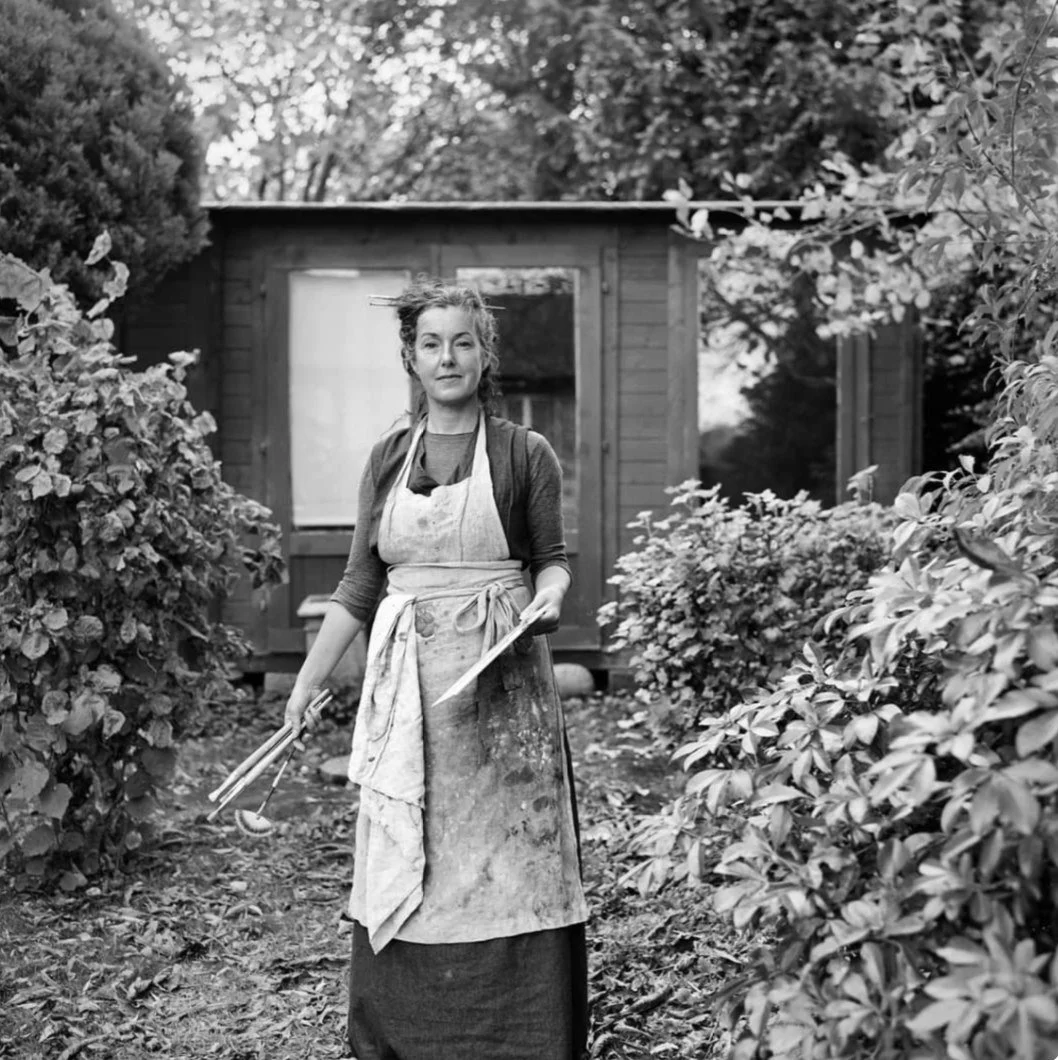
Photo credit: Tobias Key
My work begins at a threshold: the moment when movement, emotion and energy align so completely that they feel transcendent. Athletes, performers and mystics go looking for that state deliberately. Most of us meet it by accident, once or twice, and remember it for years.
I work with choreographers and trained dancers through a method I call symbiotic enquiry. I bring no predetermined idea and no props. I let the unfolding movement shape my reactions, so that every gesture becomes a new hypothesis and every shift in energy an invitation to look again. My part in it is to be a resonant catalyst: to influence the work without directing it, so that the performance and the painting evolve alongside each other.
A background in scientific research sits underneath all of this. Observation, hypothesis, testing, adjustment. But an enquiry that only confirms what it expected is not an enquiry, so I leave a great deal of room for the discovery I did not plan. That balance between structure and intuition is the whole method.
What I am following is the duality of peak performance: the reflective moments where time seems suspended, and the surges of ecstasy when movement crests. Csikszentmihalyi called it flow, Diane Ackerman called it deep play. Bernini got there first, in marble, where the boundary between flesh and spirit dissolves and a body is lifted momentarily out of its own frame.
Few people stay at that pinnacle for long. My argument is that it is not an illusion. Rendering these instants in paint is a way of proposing that what we treat as mystical or elusive can in fact be seen, felt and shared.

METHOD
The finished paintings are usually built in glazed layers, in the manner of the early Italian and Dutch masters, with pigments I understand at the level of their chemistry. I use that method for a particular reason. It was not developed to render fabric, or flesh, or the fall of a curtain. It was developed to render rapture. Opaque paint returns light off its own surface, whereas a glaze lets light pass through and come back off the ground beneath, so a figure appears lit from within rather than from the room it is standing in.
I am not borrowing a historical technique and pointing it at an unrelated subject. I am returning it to the thing it was built for, with a secular body.
But a finished painting is the end of a long process rather than the whole of it. In the room, and in the months afterwards, I use whatever will do the work: drawing, colour studies, etching, film, and materials I have not tried before. The enquiry decides the method, not the other way round.
THE 2019 COLLABORATION
The paintings in this series come from a collaboration in 2019 at the University of Chichester, with Ruben de Monte, then a professional dancer with the Portuguese National Ballet, choreographer Richard Slaughter and photographer Tobias Key. It began as an enquiry into how a trained dancer’s body can unsettle expectation, particularly in the air, and grew into something about the viewer as much as the dancer.
“The creative act is not performed by the artist alone; the spectator brings the work in contact with the external world by deciphering and interpreting its inner qualification and thus adds his contribution to the creative act.”